USE CASE · CRITICAL INFRASTRUCTURE / SANGAM
Protect critical sites from autonomous threats
Aerial, perimeter and behavior intelligence to detect, classify and respond—early.
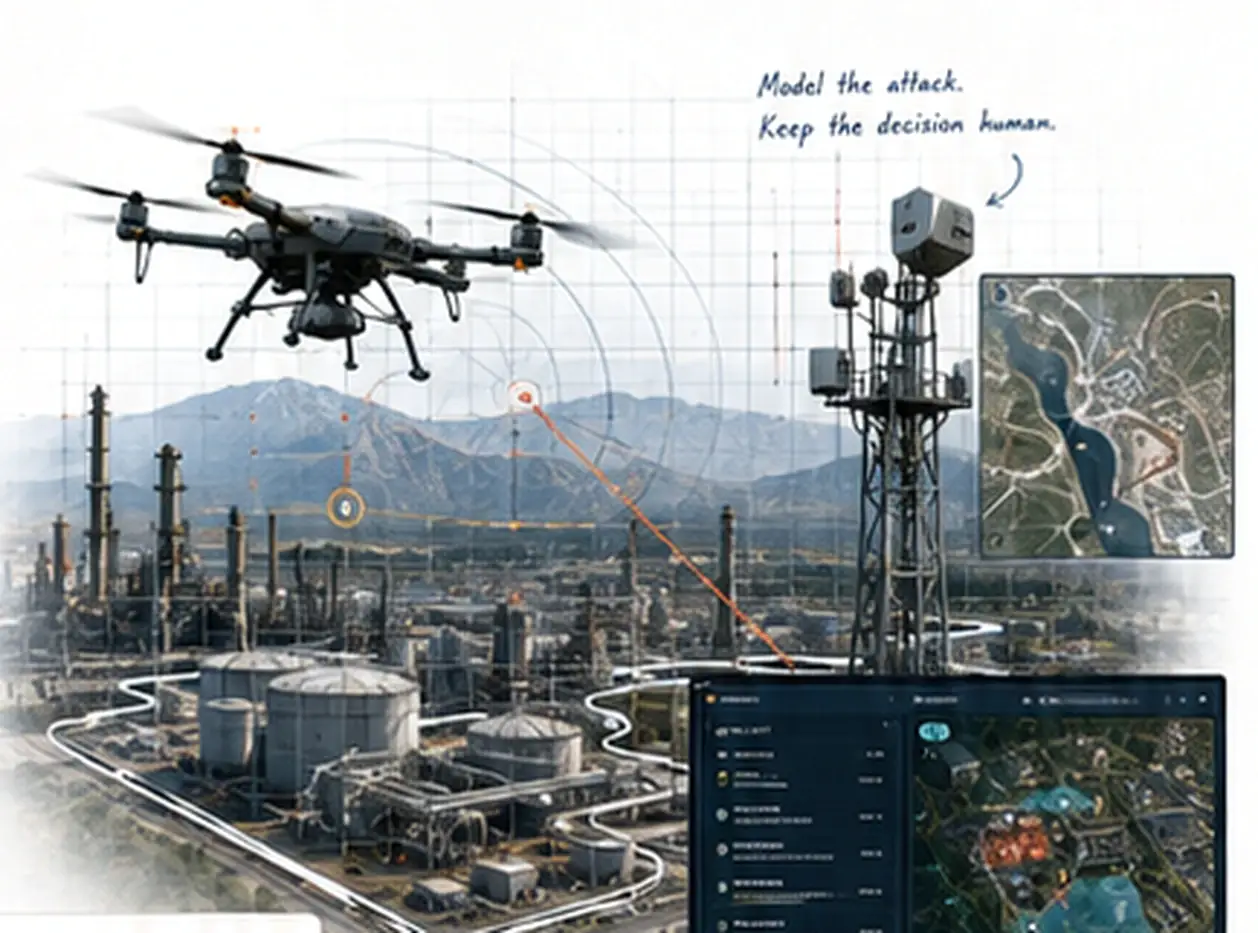
Layered sensing across a protected site provides early awareness of autonomous aerial activity.
Dams, energy plants, transport hubs and other critical installations were not designed with autonomous aerial systems in mind. Today, small drones can be launched quickly, follow pre-programmed paths and blend into complex environments. The challenge is not only seeing them, but understanding intent early enough for operators to make sound decisions.
This use case describes how SANGAM, TAEGIS AI Systems’ governed intelligence framework, unifies detection, classification and human-authorised response to protect critical sites—without removing control from people when consequences matter.
Protection begins before an object reaches the perimeter.
The threat has changed
Autonomous and semi-autonomous aerial systems are faster to launch, cheaper to operate and harder to attribute. They may carry cameras, sensors or payloads—or simply act as scouts. Their behavior can be subtle, opportunistic and designed to test our response.
Rapid deployment and pre-programmed flight reduce reaction time for defenders.
Legitimate, hobbyist and hostile use can look similar in the early moments.
Decisions must be made with limited information and real-world consequence.
A governed protection loop
Detect across multiple sensors
Correlate and track activity
Assess behavior and intent
Human authority gate before consequence
Execute approved response actions
Record outcomes and improve with evidence
Continuous feedback strengthens models, rules and operator judgement.
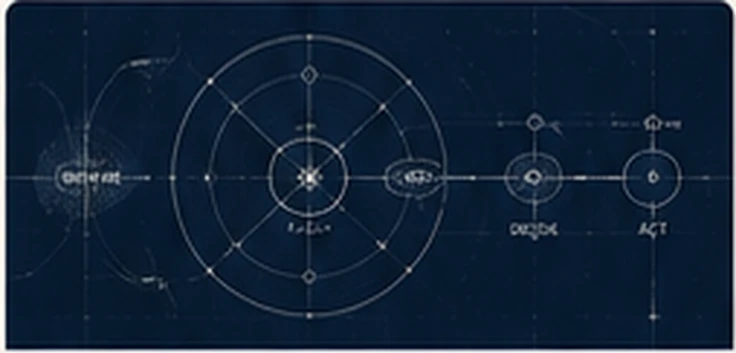
Text alternative: A six-step loop—Sense, Fuse, Classify, Authorise, Respond, Learn—with a human authority gate before response.
The proposed SANGAM solution
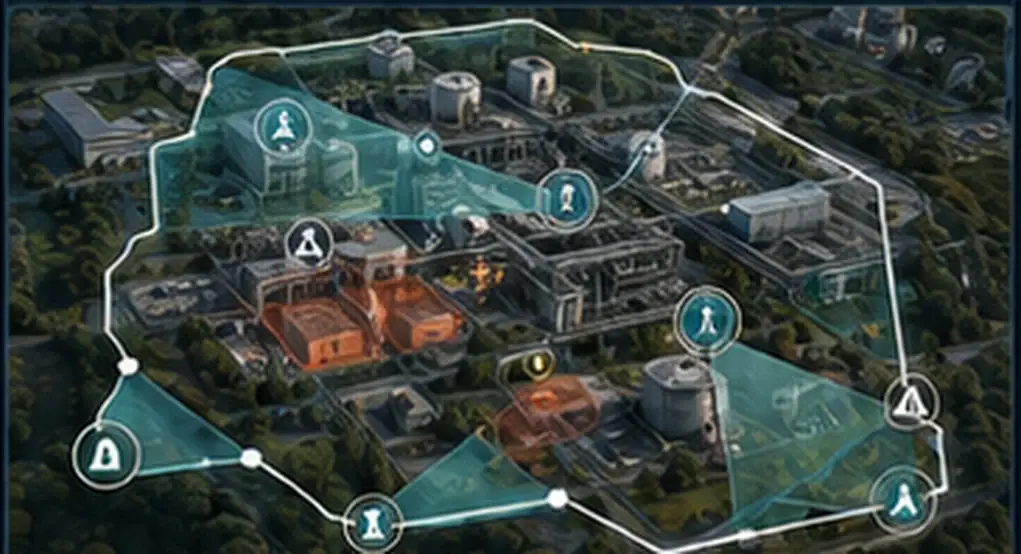
SANGAM unifies heterogeneous sensors—radar, electro-optical, RF and environmental—into a coherent, time-aligned picture. On-site compute nodes perform low-latency analytics and maintain operations even during connectivity loss.
Operators in the command centre review fused evidence, system recommendations and uncertainty indicators. Only authorised personnel can approve consequential actions.
The design prioritises early detection, clear explanations and safe, reversible responses that reduce risk without escalating unnecessary consequence.
Correlates radar, EO/IR, RF and environmental data into a consistent track picture.
Behavior-aware models provide reasons, indicators and uncertainty with each assessment.
Built-in authority gates ensure people make the decision before consequence.
Every decision is recorded with provenance for review, learning and compliance.
How we work with you
Protection capability is built in stages, so you keep control of scope, cost and evidence at every point.
A short, structured engagement to map your site, your existing sensors, your legitimate air activity and where decisions actually get made—before any platform commitment.
SANGAM configured to the site: sensor integration, edge compute for offline-first operation, authority gates and response interfaces matched to your standing orders.
Operator workflows, escalation drills and audit reporting, with a modular architecture so new sensors and rules can be added without rebuilding the system.
Operating states and decision principle
The system expresses uncertainty and adapts required human review as confidence changes.
Detect and monitor. No conclusion yet.
Gather additional data and confirm behavior.
Request human review and authorization.
Execute authorised response and record.
As uncertainty increases, so do the required review and authority.

Human authority at
the point of consequence
SANGAM presents operators with fused evidence, explanations and recommended options. People can pause, gather more information, approve or reject a response.
Risk-based response matrix
| Low confidence | Medium confidence | High confidence | |
|---|---|---|---|
| Monitor | Log and observe. No alerts beyond normal. | Increase tracking cadence. Notify on shift. | Maintain tracking. Prepare for escalation. |
| Confirm | Request additional data. Validate sensors. | Cross-check with other sensors. Operator review required. | High likelihood of intent. Prepare recommendations. |
| Authorise | Not authorised. Continue to confirm. | Human decision required before any response. | Human decision required. Authorise or reject. |
Evidence from every event
An end-to-end audit trail supports transparency, learning and regulatory accountability.
Designed for degraded conditions

On-site compute maintains detection and tracking even without external links.

Store-and-forward and alternate paths keep data and operations resilient.

System continues with reduced inputs and clear confidence signals.
Automatic checks and operator validation ensure safe return to normal.
Before autonomous-threat protection enters the field
Do we understand our domain and typical legitimate activity?
How will we manage false positives and alert fatigue?
Are escalation steps clear, trained and tested?
Are responses reversible, safe and proportionate?
Do operators have the right context and tools?
Can we audit and reconstruct every major decision?
How do we recover and learn after an event?
Conclusion
Protecting critical sites from autonomous aerial threats is not about reacting faster—it is about seeing earlier, understanding better and deciding with confidence. SANGAM provides governed intelligence that keeps people in control when consequences matter most.
Protecting critical operations with governed AI
Explore SANGAM and see how governed intelligence helps you protect what matters.