FIELD NOTES
Field note: Lessons from high-altitude deployments
Systems are tested by thin air, cold, weak connectivity, difficult terrain and operational uncertainty. Designing for those conditions changes everything.
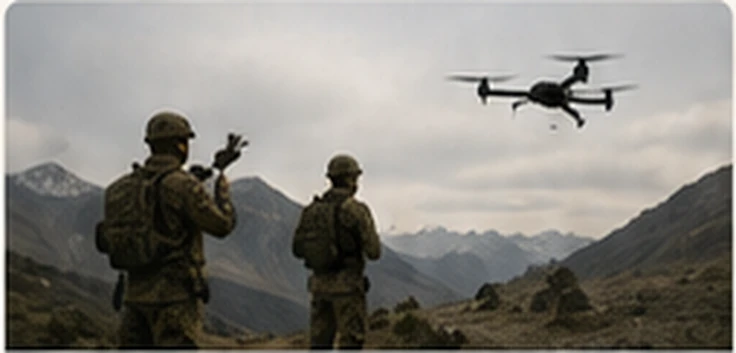
At altitude, the environment is unforgiving and infrastructure is scarce. Missions succeed when systems remain usable, decisions stay within safe bounds, and operators keep control. These lessons come from deployments where the plan met the ridge line.
1. The field changes the system
Environmental factors compound with operational friction. Assumptions that hold at sea level or on a stable network quickly break down. The better approach is to design for graceful degradation, local autonomy, and human authority close to the action.
Reliability is proven where infrastructure, weather and assumptions begin to fail.
2. What altitude changes
Lower atmospheric density reduces lift, engine power and sensor performance.
Cold drains batteries faster and increases startup and regulation challenges.
Line-of-sight is fleeting. Links drop. Bandwidth is limited and latent.
Steep terrain slows movement, complicates recovery, and concentrates risk.
3. Designing for degraded operation
Collect data from sensors and logs.
Filter, fuse and assess on the edge.
Apply mission rules and constraints.
Share data and state when link allows.
4. Five lessons from deployment
Assume intermittent connectivity and limited bandwidth. Make the system useful offline.
Power is the first constraint. Optimize draw, manage heat, and protect reserves.
Expose confidence levels and gaps. Help operators make better calls with imperfect data.
Place decision authority within reach. Automate execution, not judgment.
Store logs and telemetry on device. Assume cloud will not be there.
5. Operational thresholds
| State | System behavior | Operator role |
|---|---|---|
| Normal | All systems nominal. Full autonomy within policy and mission rules. | Monitor and verify. Enable and guide mission execution. |
| Degraded | Partial capability. Local processing, reduced sensors or bandwidth. | Increase oversight. Adjust plans and conserve resources. |
| Unsafe | Risk exceeds thresholds or uncertainty too high. Autonomy constrained. | Take control. Stabilize, recover or terminate safely. |
6. Evidence from every mission
Weather, terrain, and environment.
Sensors, operators, and external data.
Health, confidence, and versions.
Decisions and actions taken.
Approvals, overrides, or adjustments.
Results, effects, and lessons.
Edge devices capture the full audit trail, even when disconnected.
Evidence supports review, compliance and continuous improvement.
7. Human control at the edge
Automation extends reach, but humans set intent and accept risk. Systems must keep the operator in the loop with clear context and simple controls.
8. Before deployments above the tree line
Preparation turns surprises into manageable events.
How TAEGIS helps you operate in hard places
The capabilities we bring to organisations whose systems must work where infrastructure doesn’t.
Our platforms run fully offline with zero outbound connections—processing, decisions and evidence all stay local, so losing the link never means losing the mission.
Satellite maps and site data are bundled on-device with layered fallbacks—operators keep a full picture without any runtime network.
Role-based approvals, gated sign-off and audit trails keep decision authority with people on the ground—automation executes, humans judge.
We discover, pilot and scale with real users in real conditions—explainable, auditable systems designed for degraded modes from day one.
9. Reliability travels with the system
High-altitude deployments reward disciplined design and clear judgment. When systems degrade gracefully and humans stay in control, missions continue and people return. Build for real conditions. Test early. Learn faster.
Build for real operating conditions
TAEGIS helps organizations design, test and field mission systems that perform when it matters.
Explore Solutions Start a Conversation