DIGITAL TRANSFORMATION
Digital transformation that works in the field
Modernising operations is not about more technology. It is about better decisions. This guide explores how organisations can combine AI, trustworthy data and connected field teams to improve reliability, safety and performance at scale.

1. Transformation begins with the operating reality
Field teams know where work gets stuck. Permits delay shutdowns. Data sits in silos. Handoffs fail. The result is avoidable rework, longer outages and higher risk.
Digital transformation starts by facing that reality. It prioritises a small number of decisions that drive the most impact and removes the friction that slows them down.
Technology creates value only when it improves a real operational decision made by a person who owns the outcome.
2. From disconnected tools to a connected operating system
Sensors, logs and records
Clean, correlated and trusted data
AI and rules with human oversight
Guided work and execution
Performance, safety and compliance
Trusted operational data
Unify data from systems, historians and documents. Apply quality rules, lineage and time context so teams can act with confidence.
Connected field teams
Give people the right information in the right format, on any device, online or offline. Reduce handoffs, improve coordination.
Decision-ready AI
Embed AI and rules into proven workflows with clear guardrails and explainable recommendations that operators can trust.

3. Design around the people doing the work
Transformation succeeds when tools fit the way teams operate. Start with their language, their shifts and their constraints.
Involve operators, planners and reliability engineers from day one. Co-design workflows and test in the field. Measure adoption by the quality of decisions, not by the number of logins.
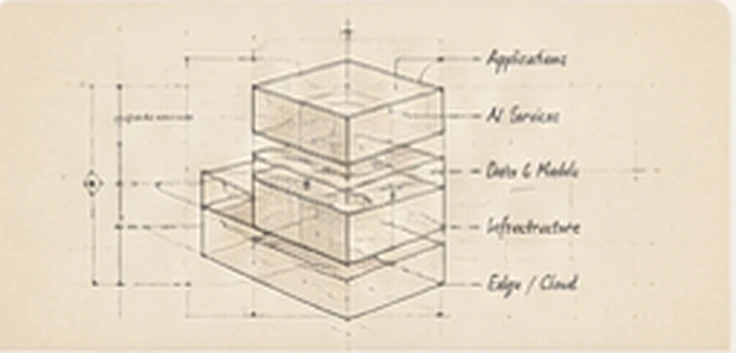
4. Five layers of practical transformation
Choose the decision that has the highest impact on safety, reliability, cost or compliance.
Connect sources, apply quality rules and create a trusted, time-aligned view.
Embed insights into existing processes and systems. Remove rework and manual steps.
Define roles, approvals and escalation. Keep humans in control of material outcomes.
Track leading and lagging indicators. Use evidence to refine and scale.
5. Transformation maturity matrix
| Dimension | Pilot | Integrated | Operational |
|---|---|---|---|
| Data | Fragmented | Standardised and curated | Trusted and continuously improving |
| Workflow | Manual and siloed | Connected across teams | Closed loop and adaptive |
| Governance | Ad hoc controls | Defined roles and policies | Active oversight and audit |
| Evidence | Limited visibility | Dashboards and reports | Actionable insights and learning |
6. Modernise without destabilising operations
Roll out in phases with clear boundaries and success criteria.
Keep proven processes available while new capabilities prove value.
Validate in real conditions. Learn early and adjust quickly.
Use results to improve models, rules and workflows.
7. The field evidence loop
Capture from assets and people
Quality, lineage and context
Detect, predict, recommend
Validate and approve
Execute guided work
Measure impact and safety
Record decisions and outcomes
8. Before transformation moves into the field
9. Transformation is an operating discipline
Technology is the enabler. Discipline is the difference. Successful organisations build capabilities that learn, adapt and compound over time.
Start with one decision. Do it well. Then expand systematically across assets, teams and sites. That is how transformation becomes your operating advantage.
How TAEGIS helps you transform in the field
The capabilities we bring to organisations modernising real operations.
We start where you are: map risks, define the highest-impact decisions and build a mission-aligned roadmap before any technology is chosen.
We build AI platforms that run on your infrastructure and integrate with your systems—modular, explainable and under your control.
Our systems are designed for degraded conditions—air-gapped operation, local data and layered fallbacks keep field teams working when connectivity fails.
Role-based approvals, gated sign-off and audit trails are built into our workflows—people stay in command of material outcomes, with evidence to prove it.
Modernise operations around better decisions
Turn data and AI into safer, more reliable and more efficient outcomes across your assets and teams.